


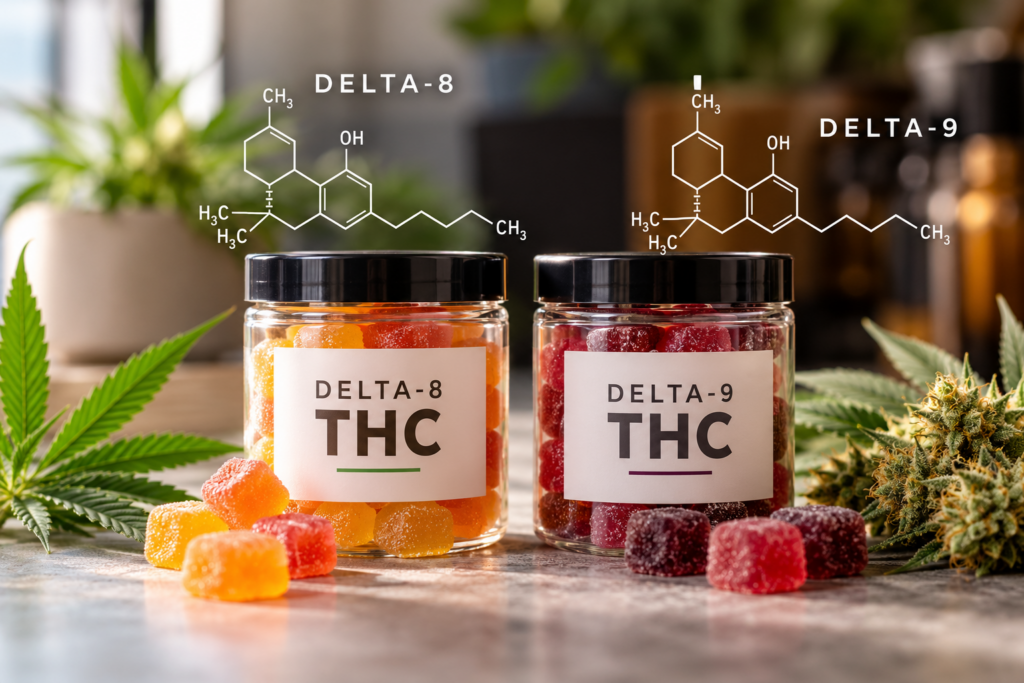
THC gummies and cannabis edibles have become increasingly popular, often marketed as convenient, discreet, and more approachable alternatives to smoking marijuana. Colorful packaging, sweet flavors, and products labeled Delta-8 or Delta-9 can make these substances seem relatively harmless. But THC gummies side effects can be more serious than many people realize, especially when consumers underestimate their potency.
Unlike smoking cannabis, which typically produces effects within minutes, THC edibles can take 30 minutes to two hours or longer to produce noticeable effects. This delay can lead someone to consume additional gummies before the first dose has fully taken effect, increasing the risk of an uncomfortable or potentially dangerous reaction.
Both Delta-8 THC and Delta-9 THC are psychoactive cannabinoids that affect the brain and nervous system. Although Delta-8 is often marketed as a milder alternative, it can still cause intoxication, impaired judgment, anxiety, and other unwanted reactions. According to the U.S. Food and Drug Administration (FDA), Delta-8 THC products have not been evaluated or approved by the FDA for safe use.
For residents throughout Boise, Meridian, Nampa, Caldwell, Eagle, and the Treasure Valley, understanding THC gummies risks and cannabis edibles side effects is especially important. Idaho maintains strict marijuana laws, and products marketed as hemp-derived or federally legal may still violate state law.
Not everyone who consumes THC gummies will experience serious complications. However, frequent use, high-potency products, and accidental overconsumption can create significant physical and mental health concerns. Understanding how these products work is an important first step toward recognizing potential problems.
THC GUMMIES SIDE EFFECTS: WHY CANNABIS EDIBLES CAN BE UNPREDICTABLE
One of the biggest concerns surrounding THC gummies is how differently they affect individuals. The amount of THC consumed, a person’s tolerance, metabolism, other substances used, and the product’s actual potency can all influence the experience.
Common THC edibles side effects include dizziness, dry mouth, increased heart rate, impaired coordination, confusion, and difficulty concentrating. Higher doses can trigger intense anxiety, panic attacks, paranoia, nausea, or severe disorientation. In some cases, cannabis intoxication may require emergency medical attention.
Unlike inhaled marijuana, THC consumed through edibles passes through the digestive system and is processed by the liver. This process produces 11-hydroxy-THC, an active metabolite that contributes to the intensity and duration of edible intoxication.
The Centers for Disease Control and Prevention (CDC) provides information about cannabis-related health risks, including impaired judgment, accidental ingestion, and the potential for cannabis use disorder.
DELTA-8 VS. DELTA-9: ARE SOME THC GUMMIES ACTUALLY SAFER?
Delta-8 THC and Delta-9 THC have similar chemical structures, but they are not identical. Delta-9 is the primary intoxicating compound associated with marijuana, while Delta-8 generally produces less potent psychoactive effects at comparable doses.
However, less potent does not necessarily mean safe. Delta-8 products may contain inconsistent THC concentrations or contaminants introduced during manufacturing. Some products are also inaccurately labeled, making it difficult for consumers to know exactly what they are taking.
Another concern is the growing perception that THC gummies are a harmless way to manage stress, anxiety, or sleep problems. While some people initially experience relaxation, regular cannabis use can contribute to dependence and may worsen anxiety or other mental health symptoms in certain individuals.
People who begin relying on cannabis edibles to relax, sleep, or manage difficult emotions may gradually develop tolerance and find themselves consuming larger amounts to achieve the same effects.
Recognizing changes in consumption, emotional well-being, and daily functioning is important. For individuals concerned about their relationship with THC products, Zelus Recovery provides addiction treatment resources and outpatient support in Meridian, Idaho.
THC GUMMIES SIDE EFFECTS: WHY TAKING TOO MUCH CAN BE DANGEROUS
One of the biggest risks associated with THC gummies and cannabis edibles is accidentally consuming too much THC. Unlike smoking marijuana, edibles take longer to produce noticeable effects. Someone may take another gummy because they believe the first one isn’t working, only to experience intense intoxication when both doses begin taking effect.
Common THC edibles side effects include:
Increased anxiety, panic attacks, or paranoia
Rapid heartbeat, dizziness, or lightheadedness
Nausea, vomiting, or stomach discomfort
Confusion, disorientation, or difficulty concentrating
Impaired coordination, judgment, and reaction time
Because THC gummies are processed through the digestive system, their effects can last considerably longer than those of inhaled cannabis. Some individuals experience uncomfortable symptoms for several hours, particularly when consuming high-potency Delta-8 or Delta-9 THC products.
Although a fatal overdose from THC alone is considered unlikely, consuming too much THC can cause serious reactions requiring medical attention. Severe confusion, persistent vomiting, extreme anxiety, and significant changes in heart rate are among the symptoms that may occur. Accidental ingestion by children presents additional risks and can result in serious poisoning.
The Centers for Disease Control and Prevention (CDC) provides information about cannabis edibles side effects, accidental ingestion, and other health concerns associated with THC consumption.
For individuals throughout Boise, Meridian, Nampa, Caldwell, and the Treasure Valley, understanding THC gummies risks is important, especially as Delta-8 and Delta-9 products continue to be marketed as convenient alternatives to traditional marijuana. Recognizing concerning patterns of use early can help prevent more serious problems, including cannabis dependence.

DELTA-8 VS. DELTA-9 THC: UNDERSTANDING THE DIFFERENCES AND RISKS
Delta-8 and Delta-9 THC are frequently marketed as different cannabis experiences, with Delta-8 often described as a gentler or less intense alternative. However, both compounds are psychoactive and can affect mood, memory, coordination, and judgment. Understanding Delta-8 vs. Delta-9 THC is important because product labeling and marketing can create a false sense of safety.
Key differences and concerns include:
Potency: Delta-9 THC generally produces stronger intoxicating effects at comparable doses.
Anxiety and paranoia: Both cannabinoids can trigger anxiety, panic, or uncomfortable psychological reactions.
Product quality: Some Delta-8 products may contain contaminants or inconsistent THC concentrations.
Delayed effects: Delta-8 and Delta-9 gummies can take hours to reach their full effects.
Impaired judgment: Both substances can affect coordination, reaction time, and decision-making.
Dependence: Frequent use of either cannabinoid can contribute to tolerance and cannabis use disorder.
One of the biggest concerns surrounding Delta-8 THC gummies is the lack of consistent manufacturing standards. Many Delta-8 products are produced through chemical conversion of hemp-derived CBD. Without adequate testing and quality controls, these products may contain unintended byproducts or inaccurately labeled THC concentrations.
The U.S. Food and Drug Administration (FDA) has warned consumers about adverse events and potential health risks associated with Delta-8 THC products. Being marketed as hemp-derived or less potent does not automatically make a THC product safe or legal.
For residents of Boise, Meridian, Nampa, Caldwell, Eagle, and surrounding Idaho communities, understanding these differences is particularly important because Idaho’s marijuana laws remain restrictive. Consumers should not assume that products advertised as federally compliant are legal under Idaho law.
CAN THC GUMMIES CAUSE ANXIETY, PANIC ATTACKS, AND MENTAL HEALTH PROBLEMS?
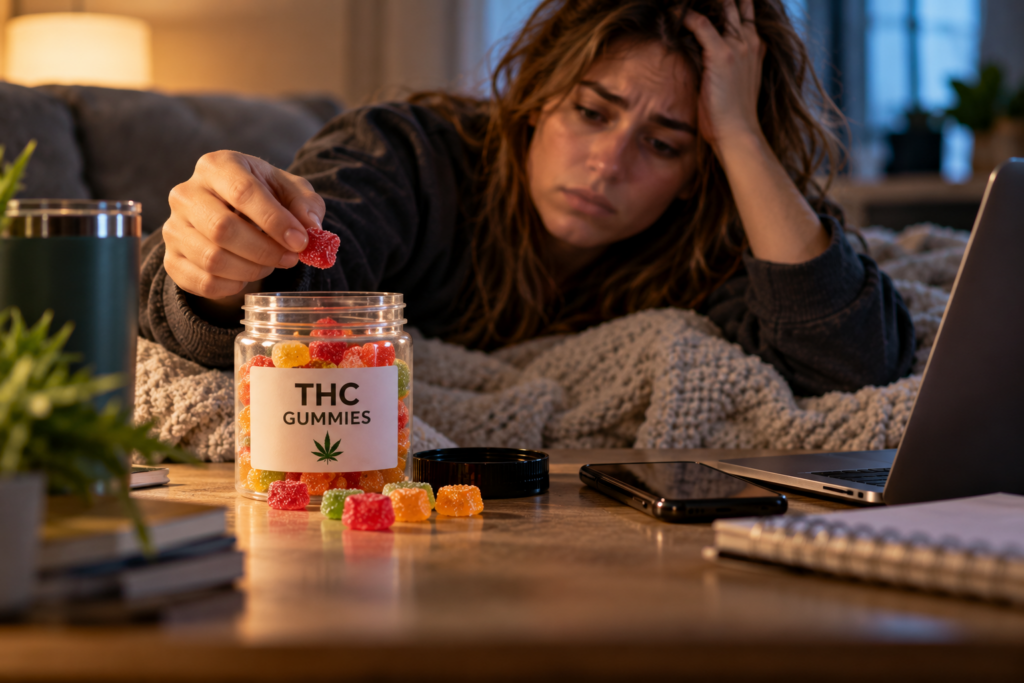
Although THC gummies are frequently marketed as products that promote relaxation and stress relief, their effects on mental health can be unpredictable. Some individuals experience temporary relaxation, while others develop increased anxiety, racing thoughts, paranoia, or panic attacks. Higher doses of Delta-8 and Delta-9 THC can make these reactions more intense.
Common psychological side effects of THC gummies include:
Sudden anxiety, nervousness, or panic attacks
Paranoia or feeling unusually suspicious of others
Racing thoughts or difficulty concentrating
Confusion, disorientation, or altered perception
Increased irritability or unexpected mood changes
Difficulty sleeping or feeling mentally foggy the following day
People who already struggle with anxiety may be particularly sensitive to the effects of THC gummies. While cannabis can initially produce feelings of relaxation, higher doses may increase heart rate and trigger physical sensations that resemble a panic attack. These reactions can be especially frightening for someone who has never experienced THC intoxication.
According to the National Institute on Drug Abuse (NIDA), cannabis use is associated with several mental health concerns, including anxiety symptoms and an increased risk of psychosis,

CAN THC GUMMIES LEAD TO DEPENDENCE OR CANNABIS USE DISORDER?
Many people assume THC gummies are not addictive because they are sold as edibles rather than smoked. However, both Delta-8 and Delta-9 THC can lead to dependence, particularly when products are consumed frequently or used to manage stress, anxiety, or sleep problems. Over time, someone may begin relying on cannabis edibles to feel relaxed or function comfortably throughout the day.
Warning signs of THC dependence may include:
Needing larger amounts of THC to experience the same effects
Using THC gummies more frequently than originally intended
Feeling irritable, anxious, or restless when not using cannabis
Experiencing sleep disturbances after stopping THC consumption
Having difficulty cutting back despite wanting to quit
Continuing to use cannabis despite problems with work, relationships, or mental health
One of the concerns surrounding Delta-8 and Delta-9 THC gummies is that their sweet flavors, convenient packaging, and discreet appearance can make frequent consumption seem harmless. However, regular exposure to THC can lead to tolerance and withdrawal symptoms, including irritability, decreased appetite, sleep difficulties, and changes in mood.
According to the National Institute on Drug Abuse (NIDA), some individuals who use cannabis develop cannabis use disorder, a condition characterized by difficulty controlling use despite negative consequences.
Not everyone who uses THC gummies will develop dependence. However, when cannabis consumption becomes a daily habit or someone feels unable to relax, sleep, or manage emotions without THC, it may indicate a developing problem. Recognizing these patterns early can help prevent more significant challenges.
For individuals and families throughout Boise, Meridian, Nampa, Caldwell, Eagle, and the Treasure Valley, understanding THC gummies risks and cannabis dependence is an important part of making informed decisions. Zelus Recovery provides outpatient addiction treatment and support for people struggling with marijuana use, cannabis dependence, and other substance-related concerns.

WHY THC GUMMIES ARE BECOMING A POPULAR WAY TO MANAGE STRESS AND SLEEP
One of the growing concerns surrounding THC gummies and cannabis edibles is their use as a way to manage everyday stress, anxiety, and sleep difficulties. Products containing Delta-8 and Delta-9 THC are frequently marketed with claims about relaxation, improved sleep, and emotional wellness. However, using cannabis to cope with uncomfortable feelings can sometimes create additional problems.
People who regularly use THC gummies may make statements such as:
“I only take gummies to help me sleep.”
“Delta-8 is natural, so it’s safer.”
“THC helps me relax after a stressful day.”
“I don’t smoke marijuana, I just use edibles.”
“I can stop whenever I want.”
“It’s legal hemp, so it can’t be that dangerous.”
While these statements don’t automatically indicate addiction, they may suggest someone is beginning to rely on THC for emotional or physical relief. Using cannabis edibles to manage anxiety or sleep can create a cycle of repeated use. As tolerance develops, individuals may increase their dosage or use THC gummies more frequently to achieve the same effects.
Another concern is that THC gummies side effects can sometimes make the very symptoms people are trying to manage worse. Although some users initially experience relaxation or drowsiness, higher doses may trigger anxiety, panic attacks, racing thoughts, or disrupted sleep. Frequent cannabis use can also lead to withdrawal symptoms, including irritability and difficulty sleeping, when someone attempts to stop.
According to the Substance Abuse and Mental Health Services Administration (SAMHSA), mental health conditions and substance use disorders can occur together and may require coordinated treatment. Recognizing when occasional THC consumption has become a coping mechanism is an important step toward preventing cannabis dependence.
For adults and families throughout Boise, Meridian, Nampa, Caldwell, Eagle, and the Treasure Valley, understanding the effects of THC gummies and the potential risks of frequent cannabis use can help identify when additional support may be beneficial. Zelus Recovery offers outpatient addiction treatment services in Meridian, Idaho, for individuals experiencing substance use and related mental health challenges.
THC GUMMIES IN IDAHO: LEGAL RISKS AND PUBLIC SAFETY CONCERNS
One of the biggest misconceptions surrounding Delta-8 and Delta-9 THC gummies is that products marketed as hemp-derived are automatically legal everywhere. While federal hemp regulations have created a complicated marketplace, Idaho maintains some of the strictest THC laws in the country. Consumers may unknowingly purchase products online or outside the state without understanding the potential legal consequences.
Important concerns surrounding THC gummies in Idaho include:
Purchasing Delta-8 or Delta-9 THC gummies that may violate Idaho law
Assuming products labeled as hemp-derived are automatically legal
Driving while impaired by cannabis edibles
Underestimating how long THC intoxication can affect reaction time and judgment
Accidentally exposing children or pets to THC gummies
Consuming products with inaccurate potency labels or questionable ingredients
Unlike some neighboring states, Idaho has not legalized recreational or medical marijuana. Idaho’s hemp rules are also more restrictive than federal standards, making it especially important for consumers to understand that THC gummies sold legally in another state may not be legal to possess in Idaho.
Another serious concern is impaired driving. Delta-8 and Delta-9 THC can affect coordination, reaction time, concentration, and decision-making, even when someone doesn’t feel significantly intoxicated. Because cannabis edibles can produce delayed and long-lasting effects, individuals may underestimate their level of impairment.
The Centers for Disease Control and Prevention (CDC) explains that cannabis can impair skills needed for safe driving, including judgment, coordination, and reaction time. Combining cannabis with alcohol can increase impairment further.
The availability of THC gummies does not mean they are harmless, and being labeled hemp-derived does not guarantee that a product is legal in Idaho. Understanding the risks associated with cannabis edibles can help individuals make more informed decisions about their health, safety, and substance use.
For residents throughout Boise, Meridian, Nampa, Caldwell, Eagle, and the Treasure Valley, recognizing the potential consequences of THC consumption is particularly important. When cannabis use begins affecting judgment, relationships, or daily responsibilities, seeking support from Zelus Recovery can be an important step toward addressing cannabis dependence and other substance-related concerns.
WHEN DOES USING THC GUMMIES BECOME A PROBLEM?
For many people, THC gummies begin as an occasional way to relax, manage stress, or improve sleep. Because cannabis edibles are often marketed as natural wellness products, it can be easy to overlook the potential for dependence. However, when someone begins relying on Delta-8 or Delta-9 THC to manage everyday life, occasional consumption can gradually develop into a more concerning pattern.
Not everyone who uses cannabis edibles develops an addiction. However, when THC consumption begins affecting emotional health, relationships, work performance, or daily responsibilities, it may be time to seek professional support. Cannabis use disorder can develop when someone continues using marijuana or THC products despite experiencing negative consequences.
Warning signs that THC gummies may be becoming a problem include:
Using THC gummies daily or more frequently than intended
Increasing the dosage to experience the same effects
Feeling anxious, irritable, or restless without THC
Depending on cannabis edibles to fall asleep
Experiencing difficulty concentrating or remembering information
Neglecting responsibilities because of cannabis use
Trying unsuccessfully to reduce or stop THC consumption
Recognizing the difference between occasional consumption and problematic cannabis use is important. At Zelus Recovery in Meridian, Idaho, outpatient addiction treatment focuses on helping individuals understand their substance use, develop healthier coping strategies, and address the underlying concerns that may contribute to dependence.
OUTPATIENT TREATMENT FOR CANNABIS DEPENDENCE
Zelus Recovery provides outpatient addiction treatment services for individuals struggling with substance use and related emotional or behavioral challenges. For someone experiencing cannabis dependence, structured treatment may be appropriate when THC consumption has become difficult to control or begins interfering with everyday life.
Depending on individual needs, an Intensive Outpatient Program (IOP) may provide additional support while allowing participants to continue living at home and maintaining important daily responsibilities.
Treatment may help individuals:
Recognize unhealthy patterns of THC and cannabis use
Develop healthier ways to manage anxiety and stress
Understand the relationship between THC and mental health
Identify triggers that contribute to repeated substance use
Build coping strategies that don’t depend on cannabis
Improve communication and strengthen relationships
Develop a plan for maintaining long-term recovery
Outpatient treatment can provide structured support without requiring residential care when clinically appropriate. Individuals can learn practical strategies for managing cravings, emotional challenges, and situations that may contribute to continued cannabis use.
ADDRESSING THC DEPENDENCE AND MENTAL HEALTH TOGETHER
For some individuals, THC gummies become a way to cope with underlying anxiety, depression, chronic stress, or difficulty sleeping. Focusing only on stopping cannabis use may leave these underlying concerns unresolved. Effective treatment should consider both substance use patterns and any co-occurring mental health needs.
For example, someone who uses Delta-8 THC gummies every evening to manage anxiety may benefit from learning healthier relaxation techniques and developing strategies for managing stress. Another individual who relies on Delta-9 THC edibles for sleep may need support addressing sleep difficulties without depending on cannabis.
According to the Substance Abuse and Mental Health Services Administration (SAMHSA), mental health conditions and substance use disorders frequently occur together. Addressing both concerns through coordinated care can support better treatment outcomes.
Family involvement and supportive relationships can also play an important role in recovery. Understanding the effects of THC gummies, recognizing patterns of dependence, and encouraging open conversations can help individuals feel supported while making meaningful changes.
A professional assessment can help determine whether someone is experiencing cannabis use disorder, whether underlying mental health concerns are contributing, and what level of treatment may be appropriate.
For individuals and families throughout Boise, Meridian, Nampa, Caldwell, Eagle, Middleton, and the Treasure Valley, Zelus Recovery offers outpatient addiction treatment services designed to help people address substance use and move toward healthier, more stable lives.
Most importantly, you don’t have to wait until cannabis use causes a serious crisis before asking for help. If THC gummies, Delta-8, or Delta-9 products have become difficult to stop using, or if cannabis consumption is affecting your mental health, relationships, or responsibilities, seeking professional support early can make a meaningful difference.

YOU DON’T HAVE TO WAIT UNTIL THC GUMMIES BECOME AN ADDICTION TO ASK FOR HELP
One of the most important things to understand about cannabis dependence is that you don’t have to wait until THC use becomes a serious problem before seeking support.
You don’t need to use THC gummies every day to have concerns about your consumption.
You don’t have to experience severe withdrawal symptoms before asking for help.
You don’t need a formal diagnosis of cannabis use disorder to seek guidance.
And you don’t have to wait until THC affects your relationships, career, or mental health.
RECOGNIZING WHEN THC GUMMIES ARE BECOMING MORE THAN OCCASIONAL USE
Maybe you’ve started taking Delta-8 or Delta-9 gummies more frequently than you intended.
Maybe you rely on cannabis edibles to relax, manage anxiety, or f
CANNABIS DEPENDENCE AND THC ADDICTION TREATMENT IN BOISE AND THE TREASURE VALLEY
Recognizing when THC gummies or cannabis edibles are becoming a problem can be difficult, especially when Delta-8 and Delta-9 products are frequently marketed as safe alternatives to traditional marijuana. However, understanding THC gummies side effects and the warning signs of cannabis dependence can help individuals take action before substance use begins causing more serious consequences.
At Zelus Recovery in Meridian, Idaho, we provide outpatient addiction treatment for individuals and families throughout Boise and the Treasure Valley. Our individualized approach helps people address problematic cannabis use, develop healthier coping strategies, and work through emotional challenges that may contribute to substance dependence.
Whether you’re struggling to stop using THC gummies, relying on cannabis edibles to manage anxiety or sleep, or experiencing symptoms of cannabis use disorder, reaching out for professional guidance can be an important first step toward recovery.
You don’t have to wait until THC dependence takes control of your life. Early intervention, professional support, and appropriate treatment can help you regain control and build a healthier future.
Learn more about Zelus Recovery’s addiction treatment programs or contact our team to discuss your concerns and explore available outpatient treatment options in Meridian, Boise, Nampa, Caldwell, Eagle, Middleton, and throughout the Treasure Valley.
FREQUENTLY ASKED QUESTIONS ABOUT THC GUMMIES, DELTA-8 AND DELTA-9
What are the most common THC gummies side effects?
Common THC gummies side effects include dizziness, dry mouth, increased heart rate, anxiety, paranoia, impaired coordination, and difficulty concentrating. Higher doses of cannabis edibles can cause panic attacks, confusion, nausea, or severe intoxication. Because THC gummies take longer to produce noticeable effects, accidentally consuming too much is a significant concern.
Can THC gummies cause anxiety or panic attacks?
Delta-8 and Delta-9 THC are both psychoactive compounds found in cannabis. Delta-9 generally produces stronger intoxicating effects at comparable doses, while Yes. Although cannabis edibles are frequently marketed for relaxation, THC can increase anxiety, trigger panic attacks, and cause paranoia, particularly at higher doses. People who are sensitive to THC or already experience anxiety may be more likely to have uncomfortable reactions. The effects of THC gummies can also last several hours, making these experiences especially distressing.
What is the difference between Delta-8 and Delta-9 THC?
Delta-8 and Delta-9 THC are both psychoactive compounds found in cannabis. Delta-9 generally produces stronger intoxicating effects at comparable doses, while Delta-8 is often marketed as a milder alternative. However, both can cause impairment, anxiety, and dependence. Delta-8 products may also contain inconsistent THC concentrations or manufacturing contaminants.
Can you become addicted to THC gummies?
Yes. Regular use of THC gummies can contribute to cannabis use disorder, a condition involving difficulty controlling cannabis consumption despite negative consequences. Warning signs may include increasing tolerance, cravings, withdrawal symptoms, unsuccessful attempts to quit, and relying on THC to manage stress or sleep. Both Delta-8 and Delta-9 THC products carry potential dependence risks.
Are Delta-8 and Delta-9 THC gummies legal in Idaho?
Idaho has strict laws regarding THC and marijuana products. Unlike states that permit recreational or medical marijuana, Idaho generally prohibits products containing intoxicating THC. Products advertised as hemp-derived or federally legal are not automatically legal in Idaho. Consumers should verify current Idaho regulations rather than relying on packaging or online marketing claims.
Where can I find treatment for cannabis dependence in Boise?
Zelus Recovery in Meridian, Idaho, provides outpatient addiction treatment services for individuals struggling with cannabis use and other substance-related concerns. Serving Boise, Meridian, Nampa, Caldwell, Eagle, Middleton, and the Treasure Valley, Zelus Recovery offers individualized treatment and support to help people develop healthier coping strategies and work toward long-term recovery.